
Around 180,000 Giant Tortoises Roam Aldabra Atoll, the Largest Estimate Ever for the Species
A study led by the Seychelles Islands Foundation and the University of Exeter estimates that about 180,000 Aldabra giant tortoises live on Aldabra Atoll, more than the human population of Seychelles. The population, which fell below 1,000 in the 19th century, appears stable, though climate change and invasive predators remain threats.
AnimalsGNGV Editorial Team4 min readLast reviewed October 12, 2026
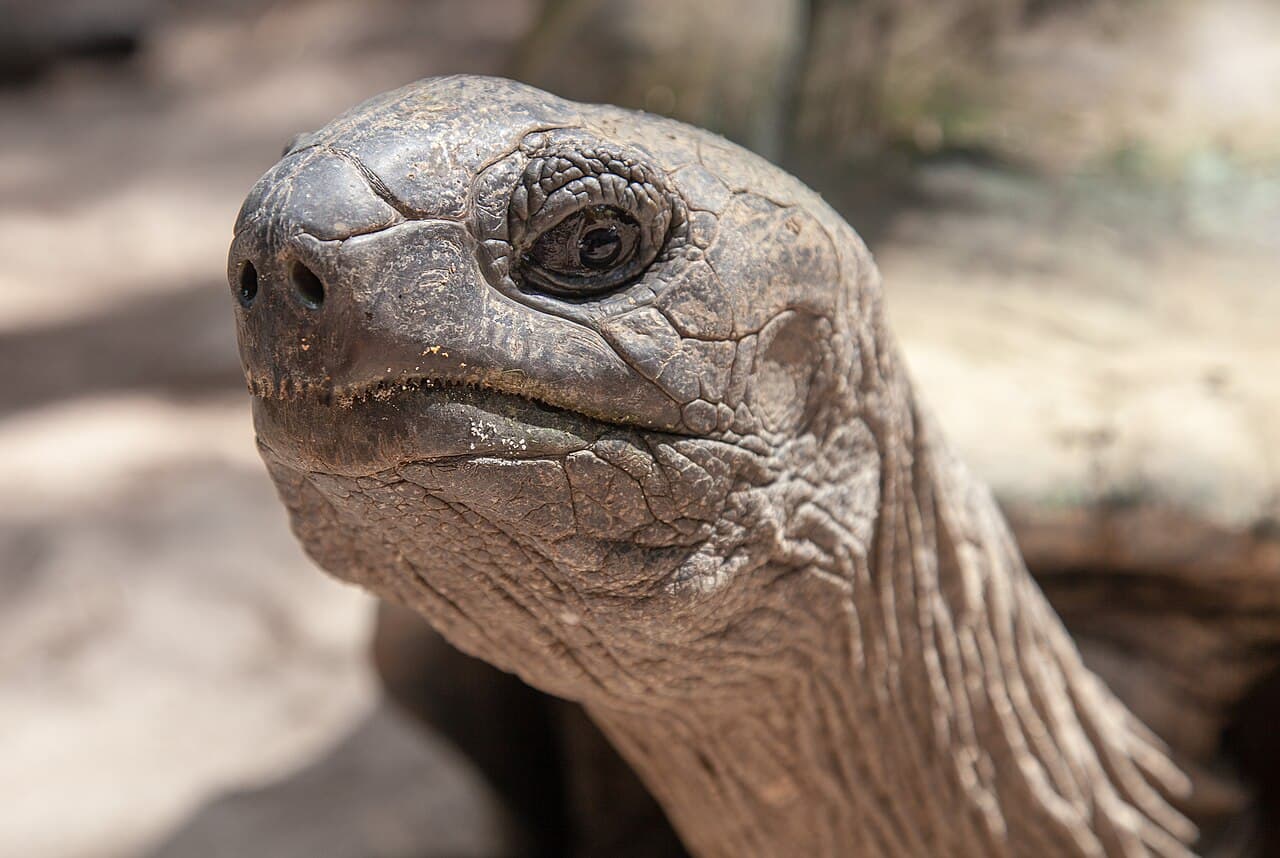
Aldabra Atoll, a remote ring of coral islands in the Seychelles, is home to far more giant tortoises than anyone had confirmed. A study published on 7 October in the journal Ecology and Evolution, led by the Seychelles Islands Foundation (SIF) and the University of Exeter, estimates the population at about 180,000 Aldabra giant tortoises, with a best estimate of almost 183,000 adults and sub-adults. That is the highest figure ever recorded for the species and more than the human population of Seychelles.
The estimate draws on five years of counts carried out by SIF staff living and working on the atoll between 2018 and 2022. It is the first rigorous, atoll-wide estimate since a widely cited figure of 100,000 from the late 1990s. The researchers used a statistical method called Bayesian hierarchical distance sampling to account for tortoises hidden in dense scrub, mangroves and other hard-to-search habitats. "By modelling what we didn't see, as well as what we did, we've produced the most reliable baseline yet," said co-author Nancy Bunbury.
The team is careful to say the population has not nearly doubled since 1999; earlier surveys probably missed many hidden animals, so older figures were likely underestimates. Over the study period, the population looked relatively stable, with the highest densities on grassland known as "tortoise turf".
The result is a long-term conservation success. Heavy exploitation in the 19th century cut Aldabra's tortoises to fewer than 1,000. The atoll became a strict nature reserve in 1981 and a UNESCO World Heritage site in 1982, and feral goats that once devastated its vegetation were eradicated in 2012. Aldabra and the Galápagos are the only two places where giant tortoises still live in the wild, and the Galápagos population is much smaller.
Challenges remain. Longer and more frequent droughts could reduce shade and food, rising seas threaten low-lying areas, and feral cats and black rats still eat eggs and hatchlings. Their planned eradication could help the population grow further. Frauke Fleischer-Dogley, who leads SIF, said more than 180,000 tortoises roaming freely is proof of what long-term commitment to conservation can achieve.
Why it matters
A species once reduced to fewer than 1,000 animals now numbers in the hundreds of thousands, showing that strict, long-term protection of a habitat can bring wildlife back.
Sources
What you can do
Learn about Aldabra and support the Seychelles Islands Foundation, which manages the atoll; read the full study summary at the University of Exeter.