

Stanford Breakthrough in Optical Cavities Could Help Quantum Computers Scale Up
Stanford researchers created miniature optical cavities that efficiently collect light from individual atoms, enabling many qubits to be read simultaneously. This light-based approach could solve one of the biggest barriers to building large-scale quantum computers.
ScienceGNGV Editorial Team4 min readLast reviewed September 28, 2026
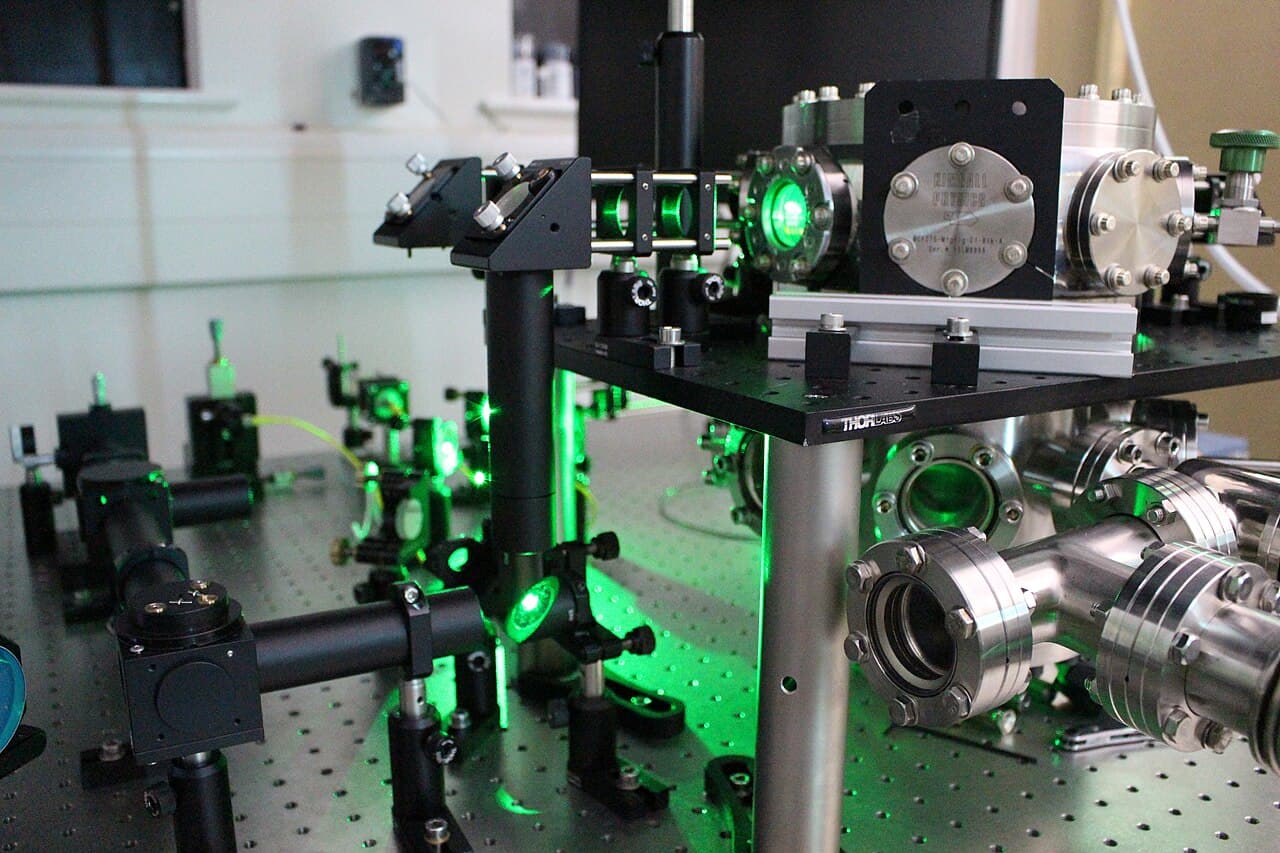
A team at Stanford University has developed a new type of miniature optical cavity that can efficiently collect light emitted by individual atoms trapped inside. This innovation addresses a critical challenge in quantum computing: reading out the states of many qubits at once without losing information to noise or inefficiency.
The tiny cavities funnel photons from each atom into optical fibers with high efficiency, meaning that as quantum processors grow from dozens to thousands of qubits, researchers will be able to monitor them all in parallel. The team published their results in early 2026, noting that the technique is compatible with existing atom-trapping platforms. If scaled successfully, this could accelerate the timeline for fault-tolerant quantum computers capable of solving problems in drug discovery, materials science, and cryptography.


